From creative applications to classic games, developers are using coding agents to build alternatives to proprietary software. Their progress exposes both the demand for greater control and the considerable work that remains.
Table of Contents
Years of work can depend on one application. A renewal, licensing change or product announcement can then change the terms overnight. That imbalance helps explain the appeal of open-source replacements: familiar capabilities with more control over software, files and costs.
AI coding tools are making that ambition more practical. ArtCraft is rebuilding creative and productivity applications; smaller projects tackle design editors and desktop utilities. In games, agents help developers understand old executables and adapt reconstructed code to modern computers.
The central question: can these replacements earn users’ trust? Publishing a repository is an early milestone. Reliably handling someone’s working files is a much higher standard.
ArtCraft: rebuilding the creative suite
Its current catalogue lists twelve applications, including PhotoCraft for image editing, VectorCraft for illustration, FilmCraft for video, LightCraft for photography, PdfCraft for PDFs and EffectCraft for motion graphics. The programme extends into publishing, word processing, audio, presentations, CAD and spreadsheets. The team advertises native Rust implementations, permissive licences, local processing and familiar layouts and shortcuts. The catalogue also identifies PhotoCraft and PdfCraft as early alpha, with the other applications in development. ArtCraft’s application catalogue
A small team is pursuing categories that usually require substantial engineering organisations. Its own documentation provides a useful check on that ambition.
PhotoCraft describes itself as a clean-room reimplementation of Photoshop, with layers, masks, brushes and PSD support. A shared command interface serves the desktop app, CLI and MCP server, aiming to preserve familiar workflows while making them programmable. PhotoCraft repository
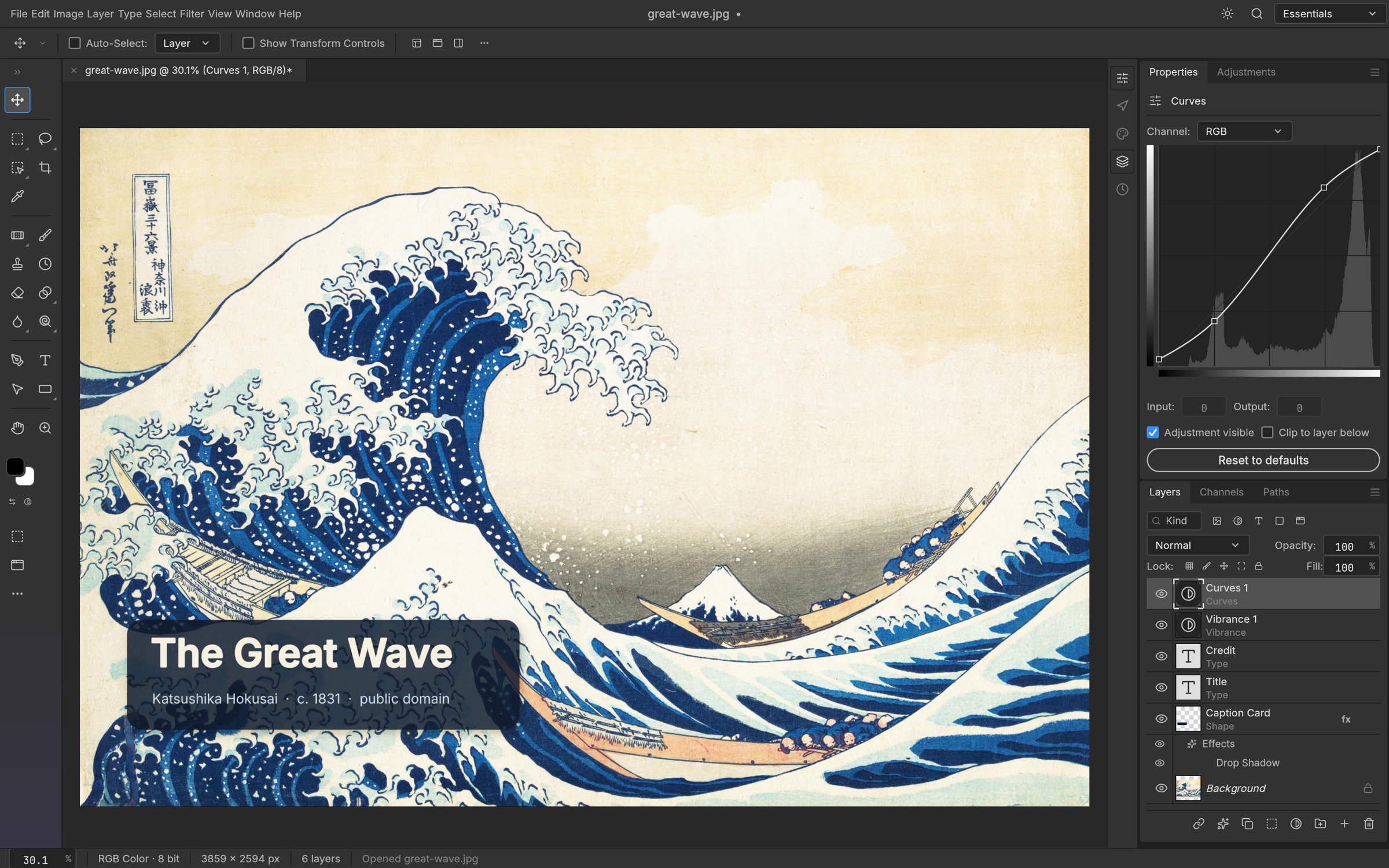

Feature breadth and professional readiness
The project’s October 10, 2026 assessment, however, estimated approximately 76 percent feature breadth and only about 45 percent readiness for professional work. Those figures are the maintainers’ estimates, rather than an independent benchmark. The assessment explicitly says that PSD exchange with Photoshop is not reliable enough for beta. It also retracts an earlier, substantially more optimistic estimate that had counted the presence of features without adequately accounting for their quality. PhotoCraft’s compatibility assessment
AI can produce interfaces and commands quickly. Professionals need them to behave consistently, preserve documents and remain responsive under pressure. Familiar layers do not remove the learning curve of building a dependable editor.
ArtCraft’s candid assessment gives contributors an engineering agenda and users a reason to temper expectations.
Beyond Adobe: design tools, utilities and app builders
GoodApps: focused desktop utilities
GoodApps approaches replacement one everyday workflow at a time. Its collection spans six desktop applications for developers, administrators, researchers and personal finance. The site presents them as free and open-source, available on macOS, Windows and Linux, with no account needed to get started. Its central promise is local data retention by default, except when users request a connection or a task requires one. GoodApps
The smaller utilities cover practical jobs:
- Serverbox: Linux administration over SSH, bringing terminals, files, containers and monitoring together.
- Shelf: bookmarks, tags and saved page copies, with search across the reading archive.
- SnippetBox: Markdown snippets with offline search by keyword or meaning.
- ParquetPeek: schema inspection, row filtering and CSV export for Parquet datasets.
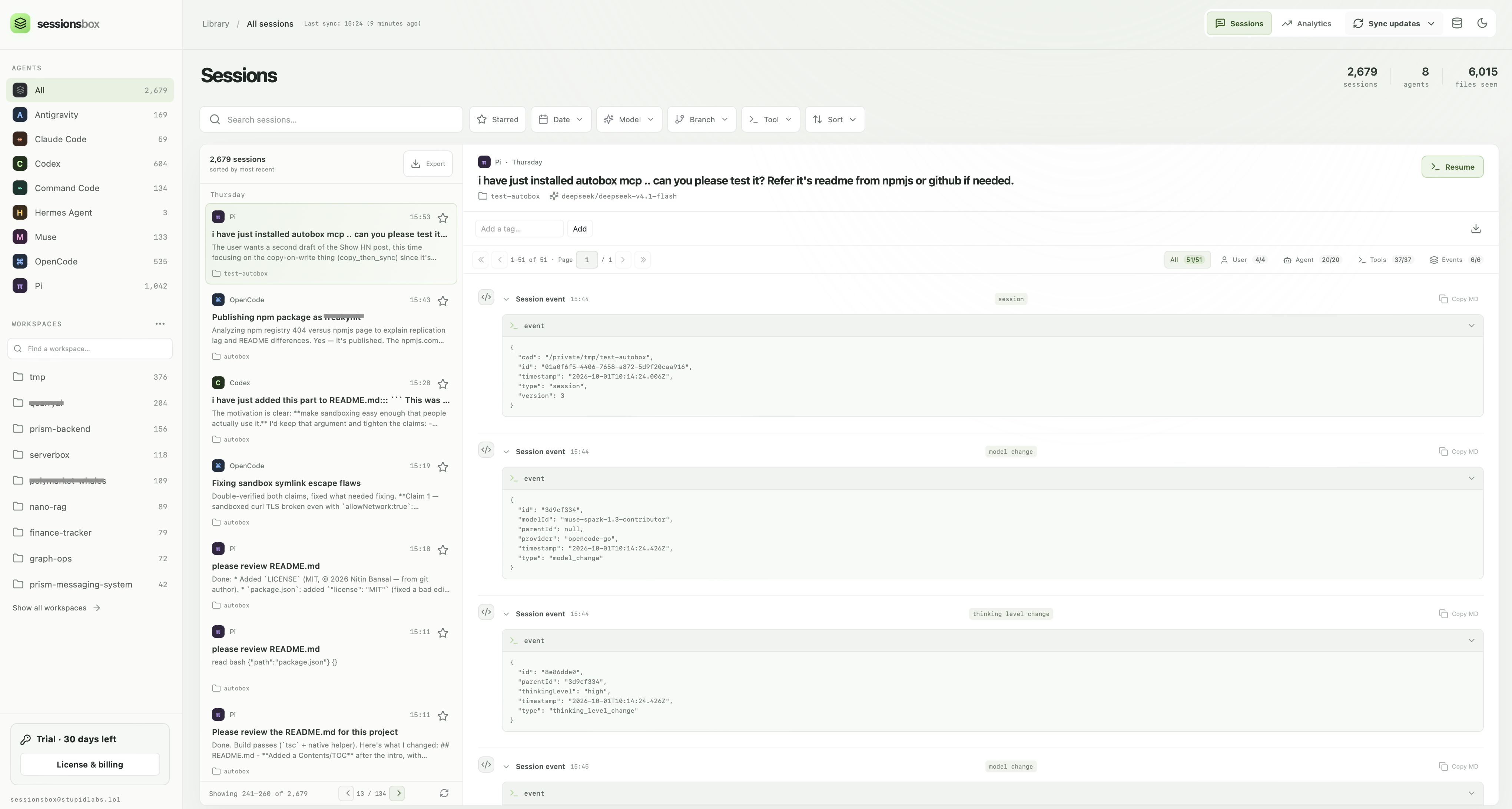
Two applications show how that approach extends to more involved workflows. SessionsBox makes coding-agent history searchable by agent, workspace, date, model, branch or tool. Users can resume sessions through the original agent CLI, export transcripts as Markdown or JSON, and inspect token usage, estimated costs and recurring tool failures. Its “sync” reads local histories into a local database without uploading transcripts or changing the originals. SessionsBox overview

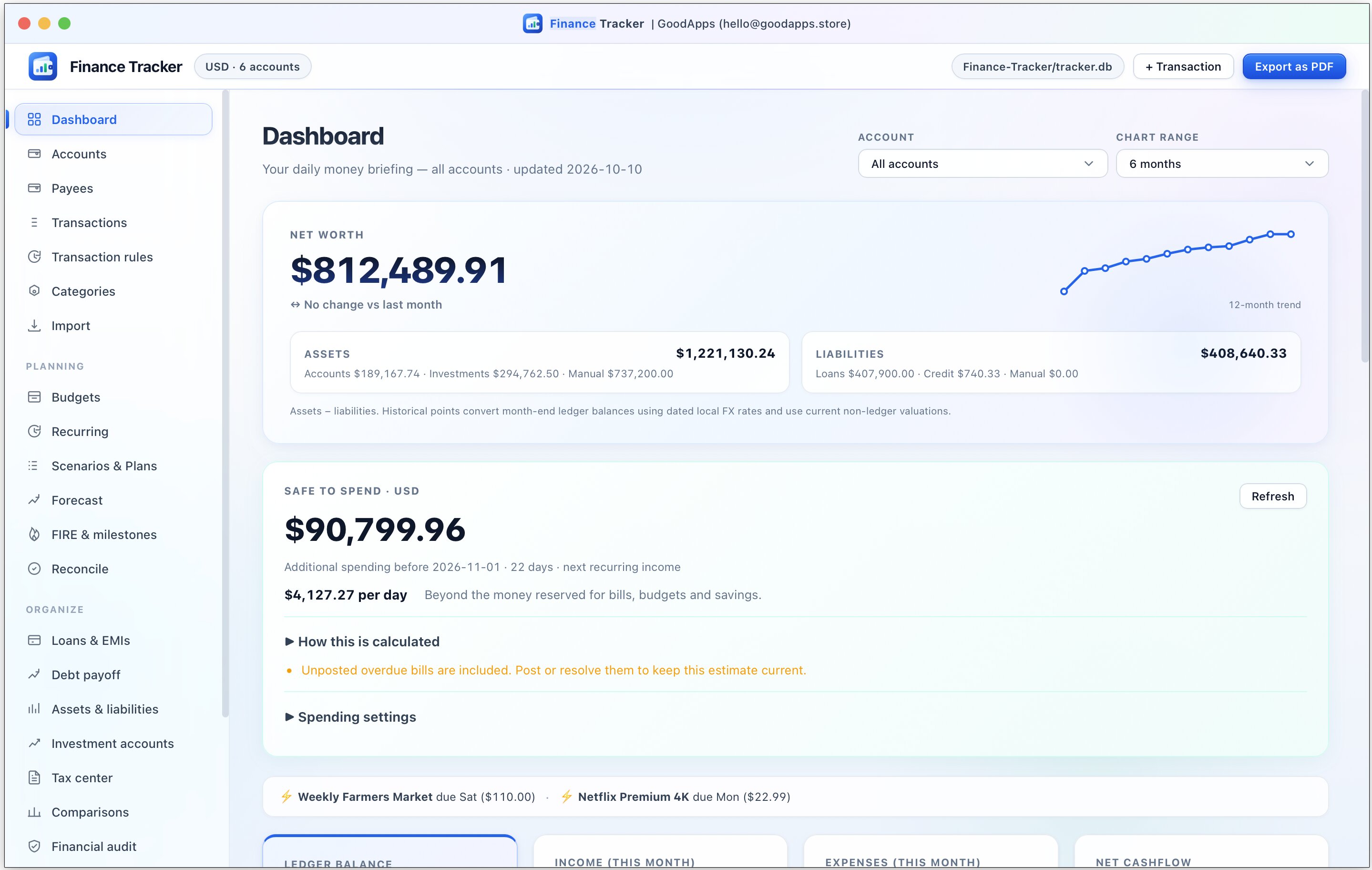
Finance Tracker combines a transaction ledger, bank-statement import, budgets, cash-flow forecasts, loan tracking and reports in one local database file. Reconciliation, split transactions and recurring rules make it more than a dashboard; scenario planning and spending estimates help connect past transactions with future decisions. The site positions it as an alternative to YNAB or Monarch. Finance Tracker overview

Local storage still leaves room for purposeful network activity: Serverbox connects to configured servers, Shelf fetches bookmarked pages, and Finance Tracker requests exchange rates when asked. GoodApps documents these boundaries on its product pages. That clarity helps users judge what stays on their machine and what a particular task sends elsewhere. Serverbox, Shelf, Finance Tracker
The appeal is practical: users can replace a specific workflow without migrating their entire working environment. A small utility can earn its place by doing one recurring job well.
Doory: a design editor users can host themselves
Doory presents itself as an open-source alternative to Canva, with a browser editor for posters, social graphics, presentations and other everyday designs. Its documentation lists collaboration, animation, background removal and several export formats. Guest designs remain in the browser; signed-in designs are stored on the server running the application, which users can host themselves. Its licence permits modification and commercial redistribution while requiring attribution in the running application. Doory repository
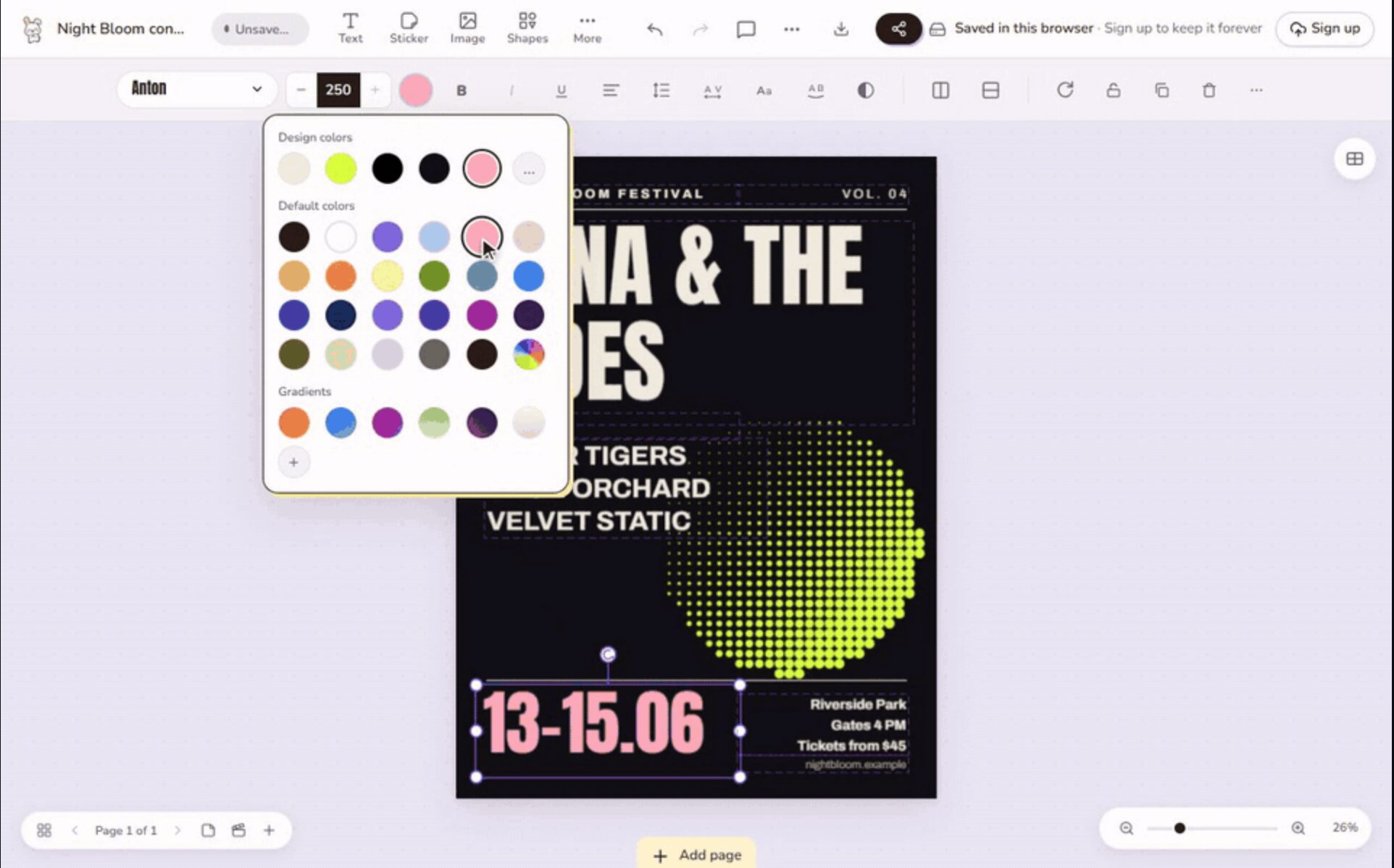
Its ten starter templates also reveal the gap with Canva: customers buy into a library of photographs, fonts and layouts as well as an editor. Still, a school or agency that maintains its own templates and infrastructure may find a focused replacement sufficient.
Vibra Code and OpenCut: different approaches to replacement
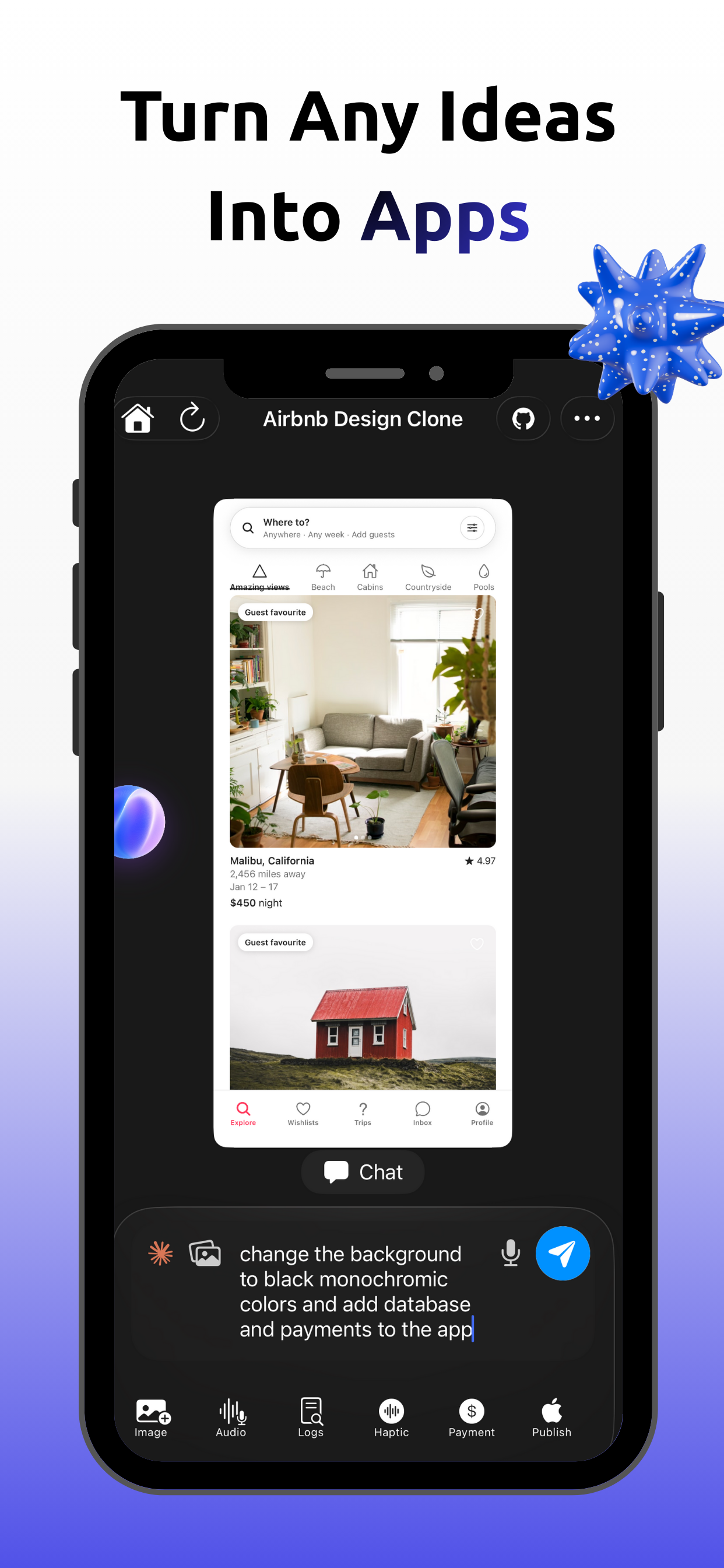
Vibra Code explicitly discloses AI’s role: one developer built its backend, mobile app, native interface and infrastructure using Claude Code. Users describe an application and preview it on their phone. Its AGPL-3.0 code is open, though running it still requires infrastructure and model services. Vibra Code repository

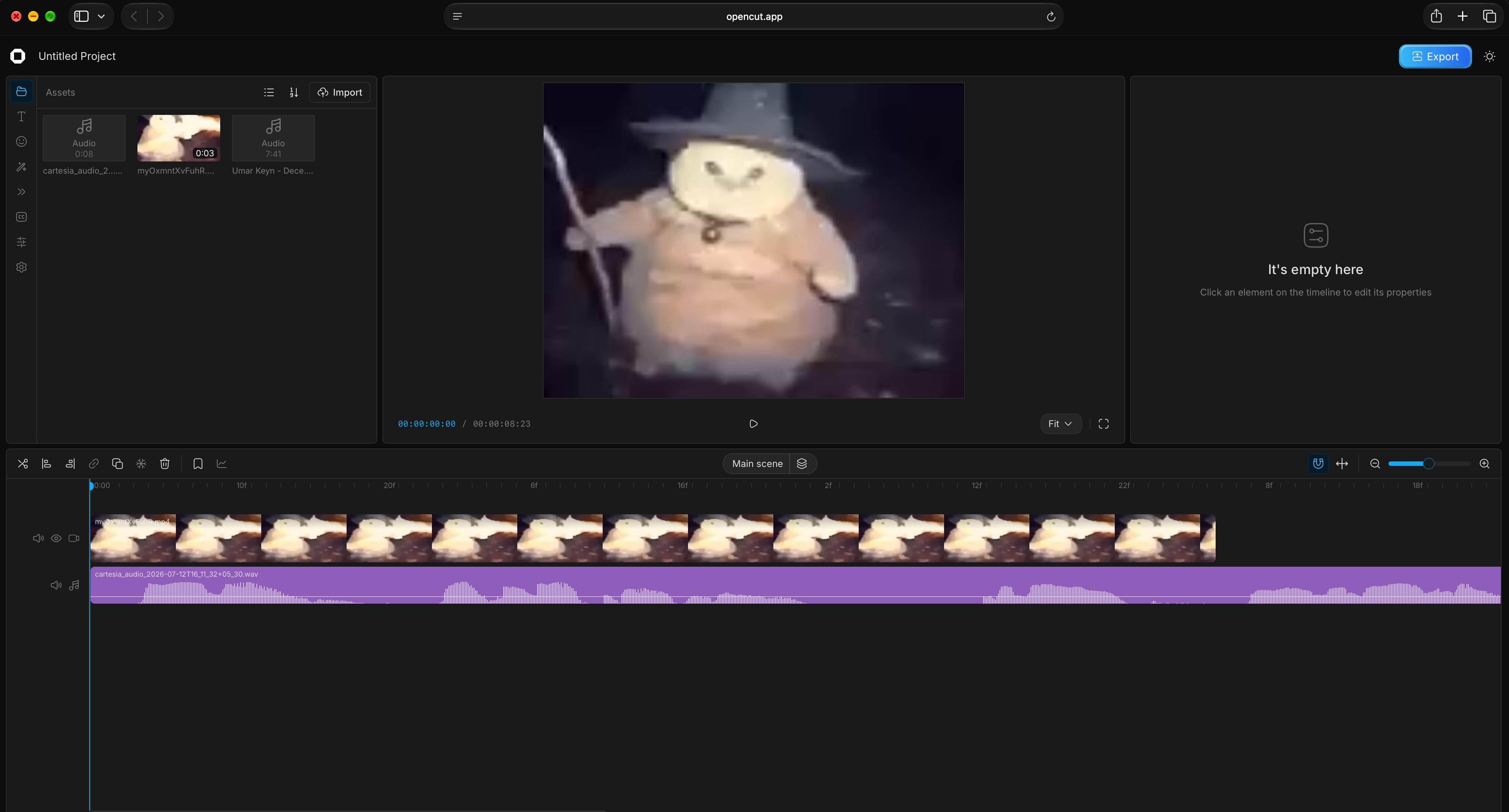
OpenCut, an open-source alternative to CapCut, is being rewritten around a Rust core. An editor API, plugins, headless operation and agent access are planned capabilities; users who need the existing editor are directed to the classic version. OpenCut repository
Penpot and AppFlowy: the existing open-source foundation
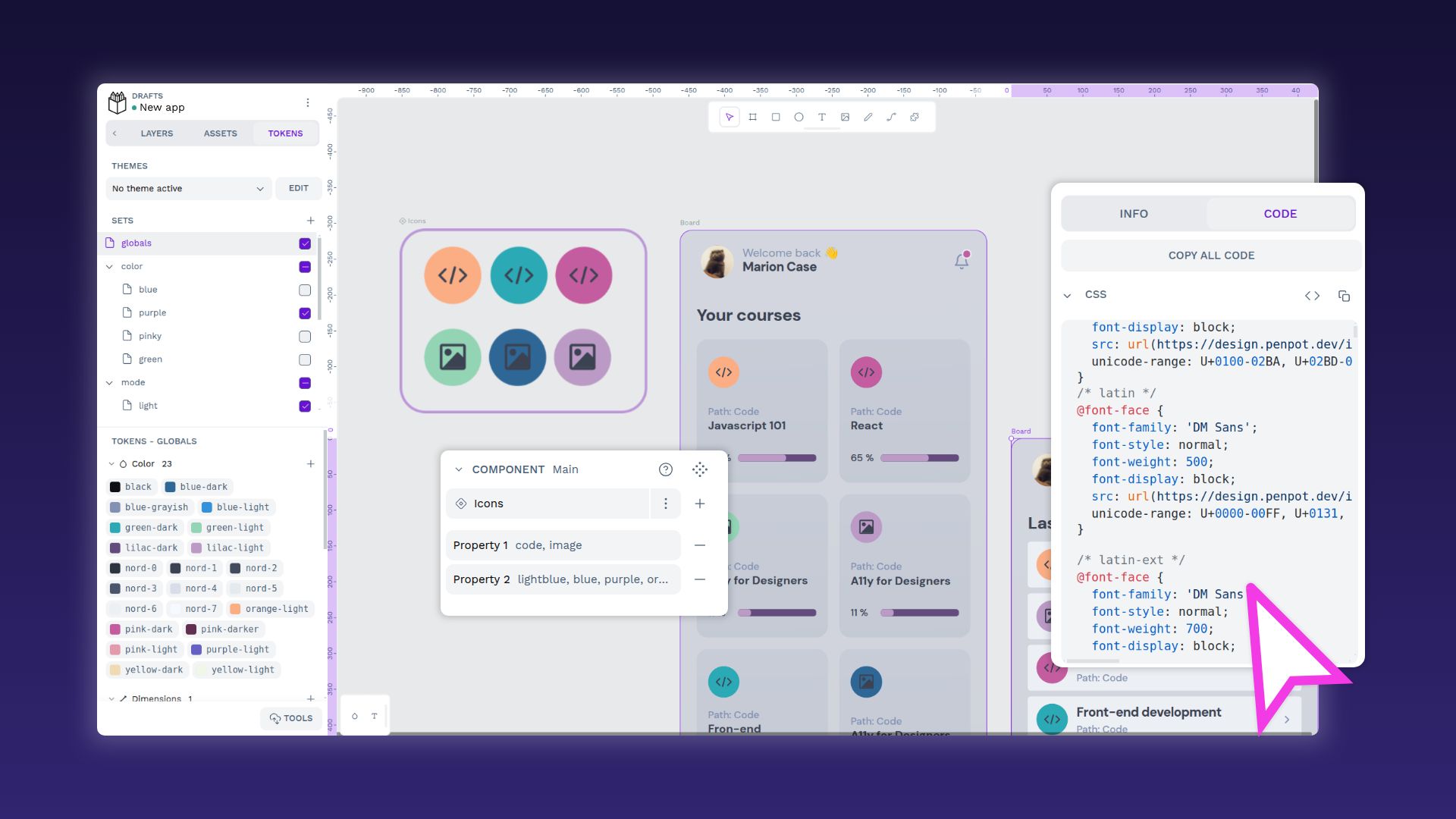
Penpot offers design tools built around SVG and CSS, self-hosting and programmable workflows. Penpot repository
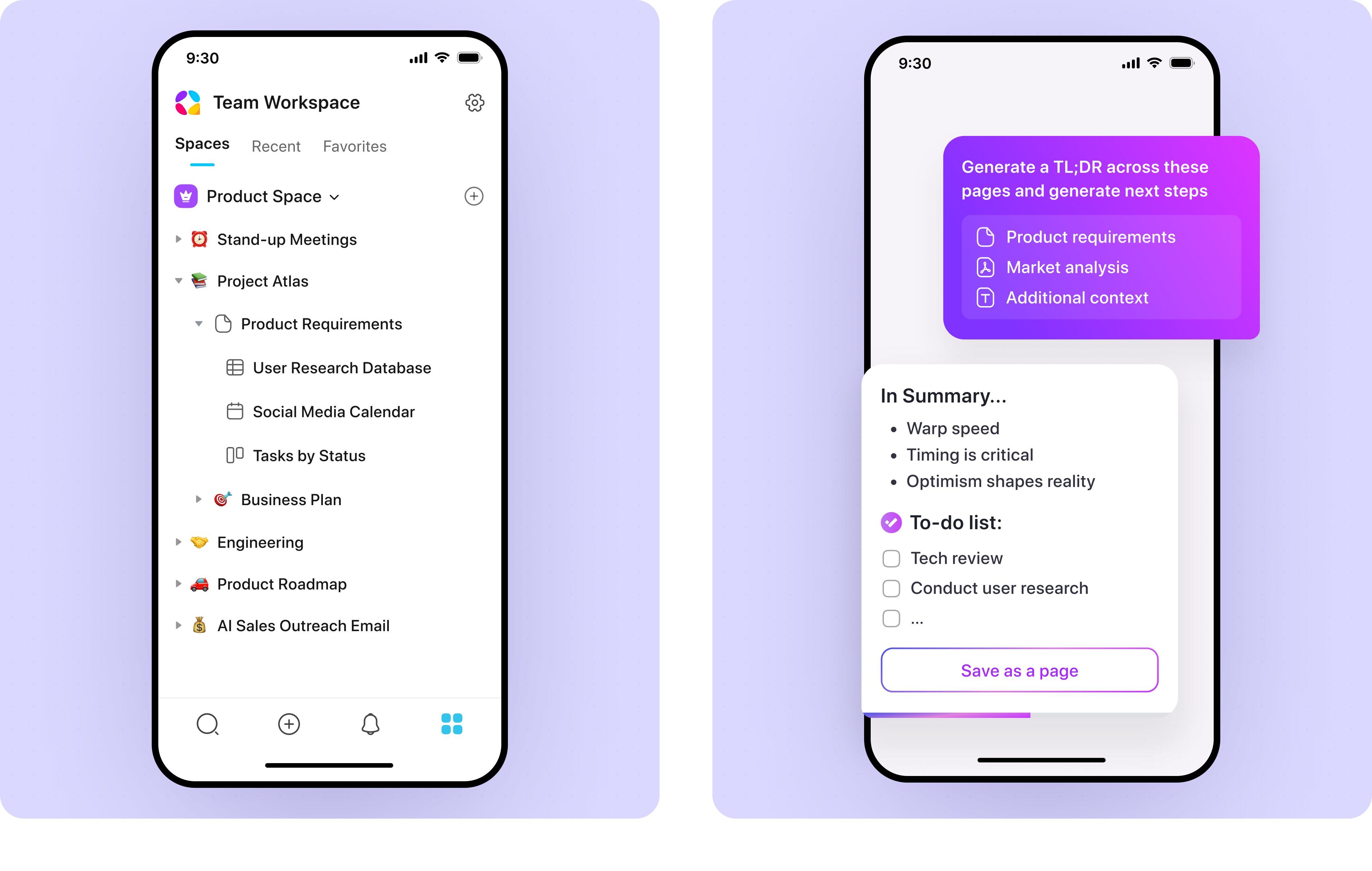
AppFlowy addresses the workspace category occupied by Notion. AppFlowy repository
These established projects show that open-source competition predates today’s coding-agent enthusiasm.
AI gives developers new resources to build on decades of open libraries, rendering systems and file-format knowledge.
Adobe and the demand for greater control
Adobe’s customer relationship helps explain the demand for control. Across these disputes, dependence on continuing commercial terms is a recurring theme—sometimes quite literally.
2013: the shift to subscriptions
In May 2013, Adobe announced that future creative-product innovations would be delivered exclusively through Creative Cloud subscriptions. Creative Suite 6 would be the last major release for perpetual licensees. Adobe’s annual report described the advantages of the transition, including more frequent updates, connected services and a lower initial purchase price. Adobe’s 2013 annual report
A perpetual licence let customers keep a version and choose when to upgrade. A subscription made continued use dependent on continued payment. That changed the economics of maintaining years of editable project files.
2022: the Pantone licensing dispute
The removal of bundled Pantone colour libraries began in 2022 after a change in Pantone’s licensing relationship with Adobe. Customers who needed those libraries were directed to a separate Pantone Connect licence. Adobe’s documentation also describes cases in which Photoshop spot channels opened in Illustrator or InDesign could appear grey or black when the relevant colour books were unavailable. It clarifies that previously created Photoshop files should render correctly in Photoshop versions released from November 2022 onward. Adobe’s Pantone documentation
The issue was specific, rather than a loss of colour across all old Photoshop files. Even so, a supplier licensing dispute could disrupt customers’ established workflows.
2023: the abandoned Figma acquisition
Adobe’s proposed acquisition of Figma raised a different concern. In November 2023, the UK Competition and Markets Authority provisionally found that the $20 billion transaction would eliminate competition in product design software and remove Figma as a competitive threat to Photoshop and Illustrator. The deal was abandoned the following month. These provisional findings underline the value of independent alternatives; the acquisition never reached a completed adjudication. CMA’s provisional findings announcement, merger inquiry record
2024: customer content and the terms-of-use controversy
In June 2024, a terms-of-use controversy brought customer control back into focus. Adobe required users to accept its terms again, prompting concerns about access to customer content and its possible use for AI training. Adobe subsequently stated that it had never trained generative AI on customer content and would make its commitments clearer in the terms. Adobe’s June 10 response
The documented issue was a breakdown in clarity and trust, rather than evidence of training on everyone’s private work. The terms governed material that could include confidential commissions and unpublished projects.
2024: the FTC complaint over cancellation practices
The subscription dispute had a separate regulatory dimension. On June 17, 2024, the US Department of Justice, following a referral from the Federal Trade Commission, filed a complaint alleging that Adobe obscured early termination fees and made cancellation difficult. The complaint focused on the annual plan billed monthly, including a fee of 50 percent of the remaining payments. Adobe disputed the allegations and said its practices were lawful and transparent. FTC announcement, Adobe’s response
2025: Photography and Creative Cloud plan changes
Pricing changes added to the pressure. From renewals beginning January 15, 2025, the US Photography plan with 20GB rose from $9.99 to $14.99 per month for customers on annual contracts billed monthly. The annual prepaid price remained $119.88. The plan also closed to new subscribers. Later in 2025, Adobe renamed its All Apps offering Creative Cloud Pro and introduced a Standard tier with more limited generative and web or mobile benefits. Photography pricing explanation, Creative Cloud plan changes
These events help explain the appeal of local operation, predictable costs and control over files, without establishing every developer’s motivation or proving every disputed decision abusive.
Games: preservation, reconstruction and source ports
In games, the incentive is often continuity rather than price. Players want titles to remain usable as hardware changes and official support recedes.
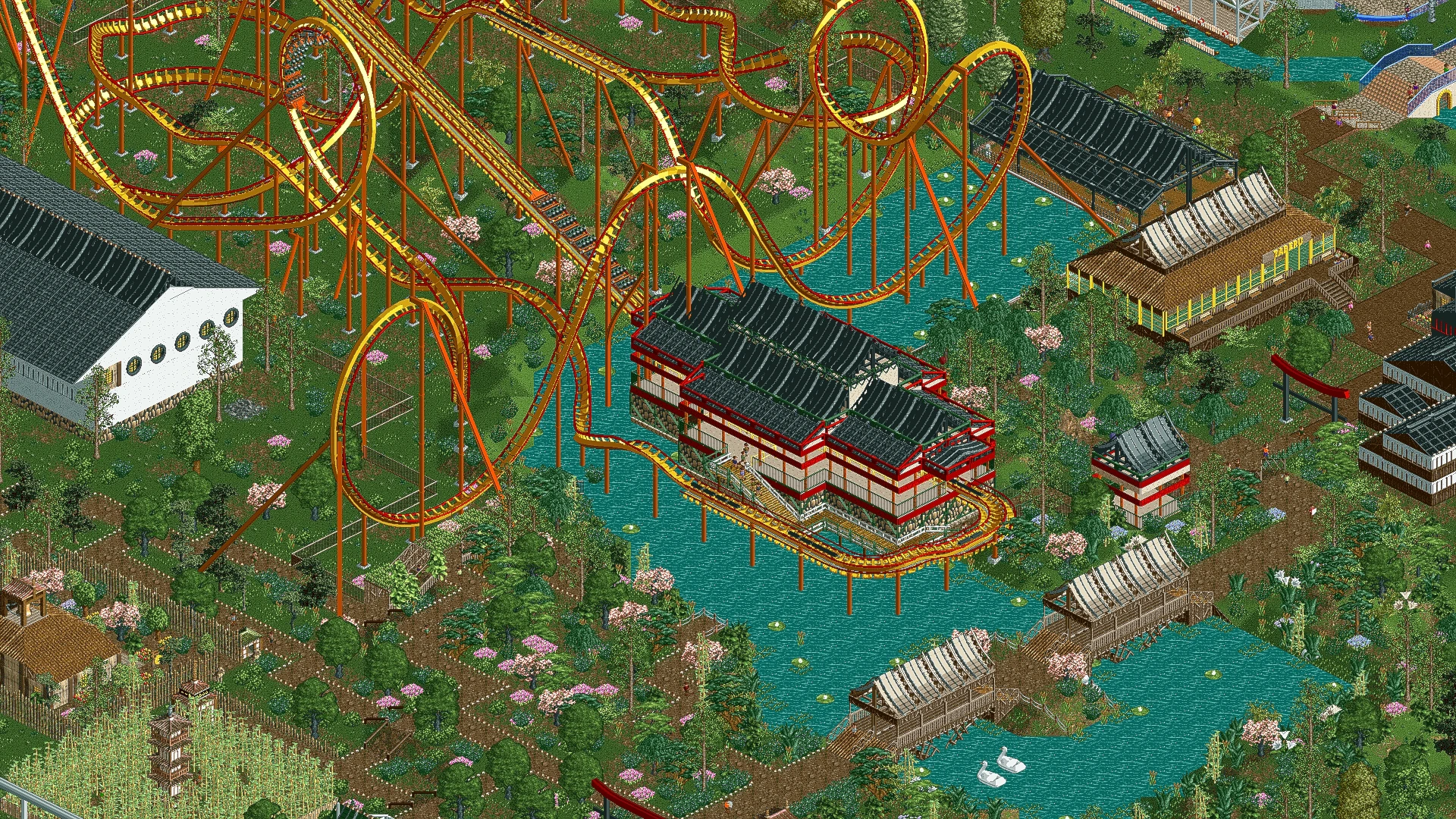
This work has a substantial history. OpenMW reimplements the engine for Morrowind and requires the original game’s data. OpenRCT2 reconstructs and extends RollerCoaster Tycoon 2, adding modern platform support and features such as cooperative multiplayer. Their existence demonstrates that preservation through reimplementation predates modern AI agents. OpenMW FAQ, OpenRCT2 repository
What the different reconstruction methods mean
| Method | What it does |
|---|---|
| Engine reimplementation | Creates new software that uses existing game data. |
| Matching decompilation | Reconstructs source intended to compile back into the original machine code. |
| Static recompilation | Translates machine instructions into code for another platform. |
| Source port | Adapts available or reconstructed source to new hardware. |
The distinction matters when assessing an achievement and crediting earlier work.
GoldenEye: AI-assisted porting built on years of prior work
A recent GoldenEye 007 PC port provides a documented example of AI-assisted development. Its maintainer discloses using Claude Code and a local model, while explicitly crediting the existing GoldenEye decompilation and the Perfect Dark porting work on which it builds. The repository advertises Windows, Linux and Steam Deck support, widescreen rendering and split-screen multiplayer, while identifying the release as pre-1.0. Users must supply their own ROM. GoldenEye PC port repository
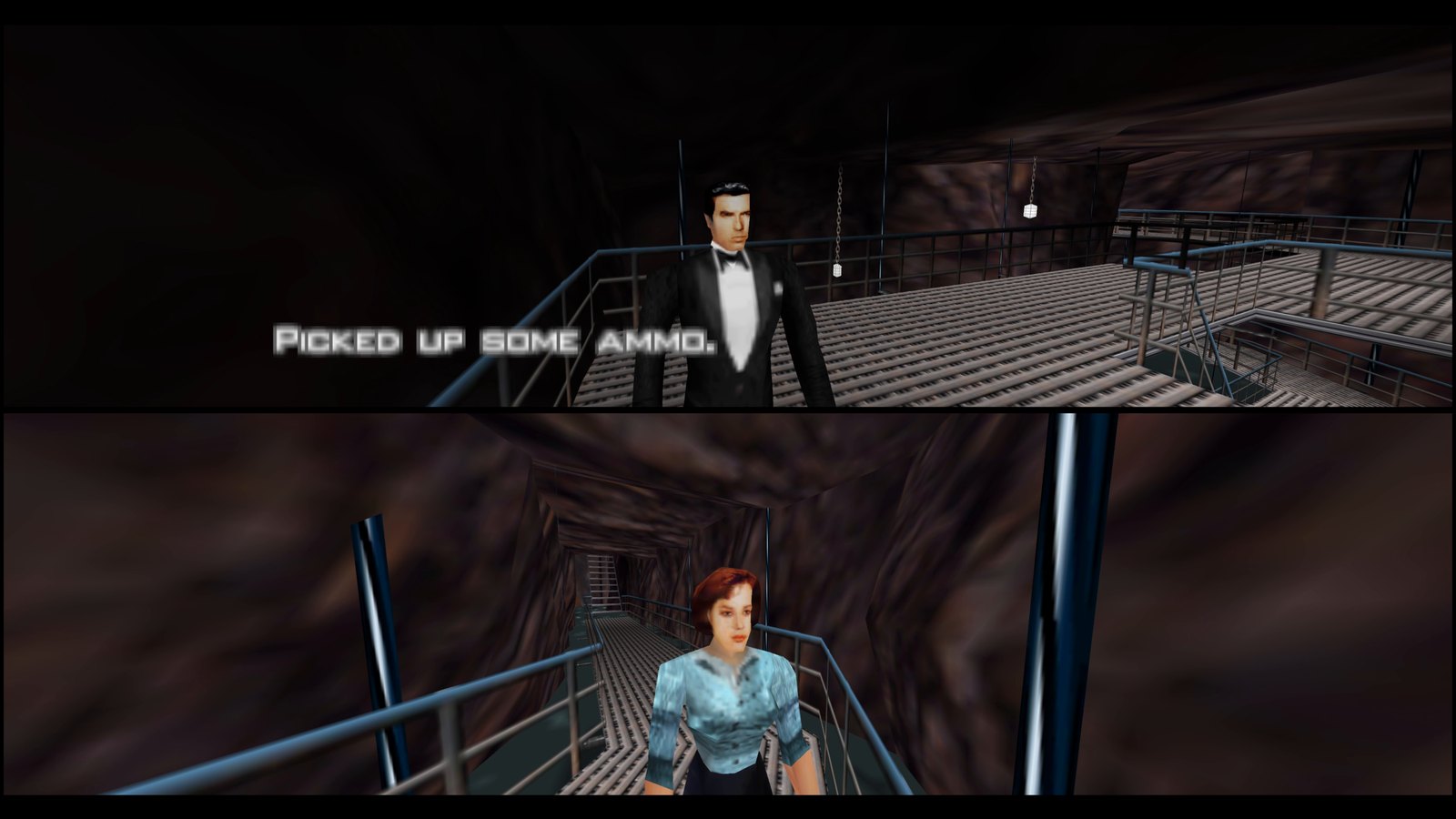

AI helped advance the port; years of earlier work made it possible. The maintainer’s MIT licence covers newly written port infrastructure, without transferring ownership of the original game.
REA and DX-Ball: reconstructing behaviour from evidence
Reverse Engineer Anything, or REA, addresses an earlier stage of this process. It connects coding agents to software-inspection tools through a CLI and the Model Context Protocol. An agent can examine assembly, pseudocode, strings and relationships between functions, then use that evidence to investigate behaviour and test an implementation. REA says analysis runs locally, while noting that the agent’s model provider has its own data policy. REA repository
Its DX-Ball case study shows why this approach deserves attention. The investigation traces how a brick’s horizontal position becomes a sound-panning value. The project reports checking the reconstructed function against the original x86 implementation in 3,205 cases and reproducing its 63 compiled bytes using the historical compiler. At its October 7 checkpoint, the wider reconstruction reported 55 maintained C functions, with work on a playable game still continuing. REA’s DX-Ball case study
This is measurable progress in reconstructing behaviour, with completion of the game still ahead. In preservation work, “save progress” applies to the engineering too.
A first-person shooter exposes the need for verification
A recent account by reverse engineer Maurice Heumann supplies an especially useful counterweight to effortless-reconstruction claims. In an October 9 report, he described spending three months using agents to reconstruct an unnamed first-person shooter. Early progress looked impressive: menus appeared and maps loaded. Yet readable code concealed incorrect function signatures, data structures and invented logic.
The team improved the process by compiling reconstructed functions with the original toolchain and comparing them against the executable. Heumann reported that 99 percent of functions were present and 83 percent were byte-exact after further work. Those are the author’s reported results, without a public, named project available for independent confirmation. His central lesson is nevertheless clear: visible progress had been a poor substitute for objective verification. Heumann’s project report
What it takes to build a dependable replacement
Verification is likely to determine which projects survive the initial excitement. A credible replacement needs to pass checks beyond a convincing demo:
- Creative applications: document preservation, rendering fidelity, colour management and stability during long sessions.
- Games: physics, timing, saves, audio and behaviours that a short demonstration never exercises.
Copyright and the limits of reverse engineering
There are legal limits as well. Publishing reconstructed code does not automatically make the original software freely redistributable. Requiring original assets addresses one part of the problem, but copyright and access-control questions remain. US law contains a specific reverse-engineering provision for interoperability, subject to conditions; it is not a general permission to reconstruct and distribute any commercial product. US Copyright Office: Section 1201
Maintenance after the first release
Free applications still need contribution reviews, bug investigations, dependency updates and fixes when operating systems change. AI may reduce the cost of producing code while increasing the amount maintainers must evaluate.
Some projects will become dependable tools; others will contribute libraries or file-format knowledge, or stall after early attention. A replacement can be valuable with fewer capabilities, provided it works reliably within the scope it claims.
What credible alternatives change for users
Every credible alternative gives users more say over subscriptions, account requirements and cloud services. A utility may replace one recurring payment; a dependable editor may let a team move part of its production process. Those choices accumulate.
That expanding freedom to choose is the strongest case for this movement. AI helps more developers attempt work that once demanded larger teams or years of specialised effort. Lasting adoption still depends on a familiar test: does it open the files, perform the task correctly and remain available when needed?